Table of Contents
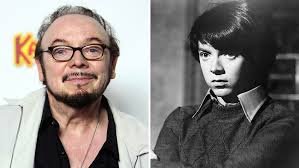
ToggleThe world of cinema lost a truly unique voice in February 2026 when Bud Cort passed away at the age of 77 . For those who cherish the offbeat, the melancholic, and the wonderfully strange corners of film, his name evokes a specific kind of magic. He wasn’t a traditional leading man in the mold of a Robert Redford or a Paul Newman, and that was precisely the point. Bud Cort carved out a space for the eccentrics, the lonely dreamers, and the death-obsessed youths who somehow find the most profound reasons to live. His legacy is a testament to the power of characters who don’t fit the mold, proving that sometimes, the most unforgettable heroes are the ones who march to the beat of a completely different drummer.
To understand Bud Cort is to understand the early 1970s, a golden age of American cinema where directors were taking risks and actors were encouraged to be authentically odd. His partnership with director Robert Altman launched him into the stratosphere, but it was his collaboration with Hal Ashby on Harold and Maude that cemented his place in film history forever . However, his story is not just one of early triumph. It’s a narrative of resilience, of surviving a near-fatal accident that could have ended his life, and of rebuilding a career as a beloved character actor and voice artist for subsequent generations. This is the deep dive into the life and times of Walter Edward Cox, the man we all came to know and love as Bud Cort.
From the Stage Door to the Silver Screen: The Early Life of Bud Cort
Before he was Bud Cort, he was Walter Edward Cox, born on March 29, 1948, in New Rochelle, New York . Growing up in Westchester County, young Walter was a far cry from the morbid characters he would later play. Instead, he was a young man captivated by the bright lights of Broadway. He possessed an artistic soul from a very early age, majoring in art in high school and nurturing a passion that extended beyond the classroom walls . He would frequently skip school, not to get into trouble, but to take the train into Manhattan and immerse himself in the live theater matinees of the day. This dedication to the performing arts showed a level of commitment and a longing for a creative life that would define his entire existence.
It was at one of these stage doors that a pivotal moment in his life occurred. He was a frequent presence at the backstage entrance of the Majestic Theatre, hoping to catch a glimpse of his idols. During the run of Funny Girl, he met a young Roslyn Kind, the sister of the show’s star, Barbra Streisand . They struck up a friendship based on their shared love of entertainment. “I was only fourteen when I met Bud at the backstage door at my sister’s play,” Kind later recalled. “We became close friends who shared our interest in entertainment” . This connection to the heart of Broadway gave him a taste of the world he desperately wanted to join. He briefly attended New York University’s Tisch School of the Arts and honed his craft under the legendary acting teacher Stella Adler, building the foundation for a professional career .
The transition from Walter Cox to Bud Cort was a practical one, necessitated by the existence of another actor named Wally Cox. To avoid confusion with the well-known character actor, he adopted the stage name “Bud Cort”—a moniker that felt both friendly and sharp, much like his on-screen persona . After a few uncredited bits, including a blink-and-you’ll-miss-it appearance as a student in Up the Down Staircase (1967), Cort made the move that would change his life: he headed west to Los Angeles to truly pursue film . It was in the LA sunshine that his unique brand of pale, introspective intensity would be noticed by the most important director of his early career.
The Altman Discovery: Brewster McCloud and MASH
Bud Cort’s big break arrived in the form of a revolutionary filmmaker, Robert Altman. Altman, known for his overlapping dialogue and ensemble casts, saw something special in the young actor. He first cast Cort in a small but memorable role in the landmark comedy MASH (1970) . As Pvt. Lorenzo Boone, Cort held his own amidst a cast of seasoned improvisers, showcasing a nervous energy that perfectly fit the film’s anarchic tone. It was essentially an audition for Altman, who was already planning his next project. The director was so impressed that he immediately offered Cort the lead in his next film, the whimsical and bizarre Brewster McCloud (1970).
In Brewster McCloud, Cort played the title role: a reclusive young man who lives in the fallout shelter of the Houston Astrodome, tirelessly working on a pair of mechanical wings so he can fly . It was a role that seemed tailor-made for Cort’s peculiar sensibility. He was fragile, determined, and completely alien to the world around him. His co-star in the film, Sally Kellerman, recalled the instant connection they had. “We were in the line for lunch when I spotted him,” she said. “Although I didn’t know who he was, I said ‘Oh, boy. We’re going to be best friends'” . The film was a critical curio, further establishing Altman’s reputation for eccentricity and giving Bud Cort his first taste of a starring role. It was a perfect warm-up for what was to come.
Harold and Maude: The Role That Defined Bud Cort Forever
If there is one single performance for which Bud Cort will be eternally celebrated, it is as Harold Chasen in Hal Ashby’s 1971 masterpiece, Harold and Maude. The role was a perfect confluence of actor and material. Cort played a young man from a wealthy but emotionally barren family, obsessed with death as a form of entertainment and rebellion. He stages elaborate fake suicides, attends funerals of strangers, and drives a hearse. His world is turned upside down when he meets the vivacious 79-year-old Maude (played by the incomparable Ruth Gordon), a Holocaust survivor who embraces life with an anarchic joy . The film charts their unlikely, beautiful, and ultimately heartbreaking relationship.
Cort knew he was part of something special the moment he read the script. In a 2012 interview, he recalled, “As I was reading the script, I immediately knew it was going to be a classic film for the ages. There was no denying it” . However, the studio, Paramount, had no idea how to sell a film about a romantic relationship between a 20-year-old and a 79-year-old, punctuated by suicide gags and a soundtrack of Cat Stevens songs. “The studio was stumped on how to publicise it,” Cort explained. “The art for newspapers and theatre posters was plain black, block lettering on an empty background; it was more appropriate for The Ten Commandments!” . The film initially flopped, deemed too strange for mainstream audiences.
But as Cort wisely noted, its success came “from the people.” Through word-of-mouth and midnight movie screenings, Harold and Maude found its audience and grew into one of the most beloved cult classics of all time . The American Film Institute ranked it Number 69 on its list of the 100 Best Romantic Comedies . Bud Cort’s performance is the anchor of the film; his deadpan reactions to the world and his subtle, beautiful transformation from a boy obsessed with ending his life to a man who learns to live are nothing short of brilliant. Director Edgar Wright perfectly articulated the power of his performance, noting that Cort delivers “one of the greatest looks to camera in film history” . For this role, he earned nominations for both a Golden Globe Award for Best Actor in a Musical or Comedy and a BAFTA Award for Most Promising Newcomer . It was the peak of his early fame.
The Blessing and the Curse of Cult Stardom
For Bud Cort, the massive, slow-burning success of Harold and Maude was a double-edged sword. While it gifted him with a legacy that would outlive him, it also created a professional prison of sorts. He became so indelibly linked with the character of Harold that Hollywood didn’t know what to do with him. He was typecast. In a candid 1996 interview with the Los Angeles Times, he reflected on this period with painful honesty. “I was typecast to the point where I didn’t make a film for five years after Harold and Maude,” he admitted. “I fought certain opportunities off because I wasn’t ready to be a brand name. In retrospect, I should have done everything” .
This period of inactivity was frustrating for an actor who had just delivered a career-defining performance. He was offered scripts that were essentially variations on the morbid young man, and he resisted being pigeonholed. The quote reveals a deep regret—a feeling that perhaps his artistic integrity or his desire to avoid exploitation cost him valuable momentum in a fickle industry. He even went so far as to say, “I’ve had my moments where I just cursed that movie and wished I’d never done it” . It’s a startling admission from a man whose face is synonymous with a beloved classic, but it speaks to the very real pain of an artist who feels trapped by his own success. He was no longer Bud Cort, the actor; he was Harold, and that was a hard shell to break.
Surviving the Tragedy: The 1979 Car Accident
Just as his career was struggling to find a new direction, tragedy struck. In 1979, Bud Cort was involved in a horrific car accident on the Hollywood Freeway. He collided with an abandoned car that was blocking a lane, resulting in catastrophic injuries . He suffered a fractured skull, a severe concussion, a broken arm and leg, and his face was badly lacerated, with his lower lip nearly severed . The accident was life-threatening and required multiple plastic surgeries and a long, painful recovery. The physical and emotional toll was immense, and the substantial hospital bills added a financial burden to his struggles.
This near-death experience eerily mirrored the themes of the film that made him famous. The young man who once pretended to die for art had come terrifyingly close to the real thing. The accident disrupted his career for years, just as it was beginning to find its footing again. He lost a subsequent court case related to the accident, adding to his woes . Yet, in true Harold and Maude fashion, Cort survived. He slowly, painstakingly rebuilt his life and his craft. The accident became a stark dividing line in his biography: the meteoric rise of the young cult star, followed by the long, quiet climb back to health and professional stability. It’s a testament to his resilience that he didn’t let this tragedy define the end of his story.
A Prolific Comeback: Film and Television in the 80s and 90s
The 1980s and 1990s saw a different kind of career for Bud Cort. No longer the fragile leading man, he evolved into one of the most interesting character actors working in Hollywood. He took on a wide variety of roles, often appearing in quirky independent films or providing a touch of eccentricity to bigger projects. In 1984, he showed his versatility by taking on the title role in The Secret Diary of Sigmund Freud and providing the voice of Edgar, the sentient computer, in the tech-romance Electric Dreams . He also appeared in the sci-fi horror remake Invaders from Mars (1986) and the adaptation of Robert Cormier’s The Chocolate War (1988) .
This era proved that Bud Cort was a working actor who could elevate any project he was in. He took a step behind the camera in 1991, writing, directing, and starring in Ted & Venus, a dark comedy about an obsessive poet . He popped up in unexpected places, like a brief, uncredited cameo as a restaurant manager in Michael Mann’s heat Heat (1995) . As the 90s progressed, he became a familiar face to a new generation of filmgoers through a series of high-profile supporting roles. He appeared as a stoned angel in Kevin Smith’s religious satire Dogma (1999), and as Peter, the camp counselor, in the cult favorite But I’m a Cheerleader (1999) . He also played Romero, the sympathetic bartender, in the guilty pleasure Coyote Ugly (2000) . This period of his career was a masterclass in reinvention, proving that the best actors are the ones you recognize but can’t always place, because they disappear so completely into their roles.
Later Career and the Wes Anderson Renaissance
In the 2000s, Bud Cort experienced a beautiful late-career renaissance, largely thanks to the rise of a new generation of filmmakers who revered the 1970s cinema he helped define. The most significant of these was Wes Anderson, a director whose entire aesthetic owes a debt to the quirky, melancholic humanism of Hal Ashby. Anderson cast Cort in his 2004 film, The Life Aquatic with Steve Zissou . In the film, he played Bill Ubell, the bond company stooge who is constantly monitoring the financially troubled expedition. As part of an ensemble that included Bill Murray, Owen Wilson, and Anjelica Huston, Cort fit in perfectly, bringing his signature deadpan energy to the delightfully odd world of Team Zissou. The role earned him a nomination for the Broadcast Film Critics Association Award for Best Cast, highlighting the strength of the ensemble .
Alongside his live-action work, Bud Cort found a thriving second act as a voice actor. He became a familiar presence in the DC Animated Universe, most notably voicing the villainous Toyman (Winslow Schott) in series like Superman: The Animated Series, Static Shock, and Justice League Unlimited . His voice was perfect for animation—distinctive, slightly off-kilter, and capable of conveying both menace and pathos. One of his final and most beautiful roles was providing the voice of The King in the 2015 animated adaptation of The Little Prince . It was a fitting final bow for an actor who spent his career exploring the inner lives of dreamers and outsiders. The film premiered at the Cannes Film Festival and won the César Award for Best Animated Film, a beautiful capstone to a remarkable career .
To better visualize the breadth and depth of his work, here is a snapshot of some of his most memorable roles across five decades:
| Decade | Notable Film Roles | Notable TV/Voice Roles |
|---|---|---|
| 1970s | MASH, Brewster McCloud, Harold and Maude | Columbo |
| 1980s | Electric Dreams (voice), Invaders from Mars | Tales from the Darkside, The Twilight Zone |
| 1990s | Dogma, But I’m a Cheerleader, Heat | Superman: The Animated Series (Toyman) |
| 2000s | The Life Aquatic with Steve Zissou, Coyote Ugly | Arrested Development, Ugly Betty, Criminal Minds |
| 2010s | The Little Prince (voice) | Eagleheart |
His television work in this later period was just as varied. He made a memorable guest appearance on Arrested Development as a fictionalized version of himself, and played a priest officiating a wedding on Ugly Betty . In a stark departure, he guest-starred on the crime drama Criminal Minds in the episode “Mosley Lane” as Roger Roycewood, a chilling portrayal of an elderly pedophile . It was a dark, complex role that showed he was still willing to take risks and challenge his gentle, quirky image. From the whimsical world of Wes Anderson to the grim reality of a police procedural, Bud Cort proved time and again that his range was far wider than his early typecasting suggested.
The Final Curtain: Legacy and Passing
Bud Cort passed away on February 11, 2026, at his home in Connecticut following a long illness . His close friend, writer and producer Dorian Hannaway, confirmed his death, remembering him as a “savant at acting” who was “blessed with a passion for this as a young man” . The news was met with an outpouring of grief and appreciation from fans and colleagues alike, all of whom recognized the passing of a truly original talent. He is survived by his brothers, sisters, and numerous nieces and nephews, who have planned a memorial to celebrate his life in Los Angeles .
What is the legacy of Bud Cort? It is richer and more complex than simply being the star of a cult film. He represents the enduring power of the outsider. In an industry that often celebrates a narrow definition of beauty and normality, Cort’s career was a victory lap for the weird, the sensitive, and the introspective. He showed generations of viewers that it was okay to feel like you didn’t belong, and that there was profound beauty in that feeling. His collaboration with Ruth Gordon in Harold and Maude created a new kind of love story, one that transcended age and convention to focus on the soul-deep connection between two people.
Moreover, his life story is one of resilience. He experienced the highest of highs and the lowest of lows—typecasting, a devastating accident, and the long slog of rebuilding—yet he never stopped working. He never stopped creating. From the computer voice in Electric Dreams to the king in The Little Prince, he continued to share his unique instrument with the world. He co-founded the LA Classic Theatre Works with Richard Dreyfuss and Rene Auberjonois, demonstrating his commitment to the theatrical arts until the very end . Bud Cort may have left us, but Harold Chasen will continue to drive his hearse through the parks, strum his ukulele, and flip that iconic bird at the world for generations to come.
Frequently Asked Questions about Bud Cort
Q1: What was Bud Cort’s real name?
Bud Cort was born Walter Edward Cox . He changed his name early in his career to avoid being confused with another actor of the era, Wally Cox .
Q2: What is Bud Cort most famous for?
He is most famous for his starring role as the death-obsessed Harold in the 1971 cult classic Harold and Maude, opposite Ruth Gordon . The film was initially a box-office disappointment but grew to become an American classic.
Q3: Did Bud Cort win any awards for his acting?
While he didn’t win major competitive awards, he was nominated for several prestigious ones. For Harold and Maude, he was nominated for a Golden Globe Award for Best Actor and a BAFTA Award for Most Promising Newcomer . He was also nominated for a Golden Laurel Award for his role in Brewster McCloud .
Q4: What happened to Bud Cort’s career after Harold and Maude?
He experienced significant typecasting after the film’s success, which led to a period of limited film work . His career was also severely disrupted by a near-fatal car accident in 1979. However, he successfully reinvented himself as a prolific character actor and voice artist, appearing in films like Dogma, The Life Aquatic with Steve Zissou, and shows like Criminal Minds .
Q5: What was the cause of Bud Cort’s death?
Bud Cort passed away on February 11, 2026, at the age of 77. His close friend confirmed that he died following a long illness .
Q6: What were some of Bud Cort’s notable voice acting roles?
He was a prolific voice actor. He voiced the computer Edgar in Electric Dreams (1984). He is also well-known for voicing the villain Toyman in several DC Animated Universe series, including Superman: The Animated Series . One of his final roles was voicing The King in the 2015 animated film The Little Prince .
Q7: Did Bud Cort direct any films?
Yes, in 1991 he wrote, directed, and starred in the film Ted & Venus, a dark comedy about an obsessive poet .
Conclusion
In the grand tapestry of Hollywood history, Bud Cort represents a singular and irreplaceable thread. He was never the biggest star, nor the most conventionally handsome, but he possessed a quality far more rare: authenticity. From his early days as a Broadway superfan to his final performance as a king in a beloved animated fable, his journey was one of passion, resilience, and an unwavering commitment to the unconventional. He taught us that life is worth living, even when it’s messy and sad, and that love can bloom in the most unexpected gardens. For Harold and Maude alone, he secured his immortality, but for the quiet dignity with which he navigated the ups and downs of a five-decade career, he earned our lasting respect. As the lights dim on the stage of his life, the spotlight on his work shines brighter than ever.