
Table of Contents
ToggleFor nearly two decades, watching Stephen Curry play basketball has been like witnessing a master painter at work. The flurry of motion, the impossible range, and the shot that seems to hang in the air just long enough to break a defender’s spirit have defined an era of basketball. But behind the sellout crowds and the championship parades, there’s a quieter, more grueling narrative that has shaped his career just as profoundly as his jump shot: the constant battle with his own body. The conversation surrounding a “stephen curry injury” is not a new one; it’s a thread that has been woven into the fabric of his legacy since his days at Davidson College.
Understanding the timeline of these setbacks is essential to appreciating the player he has become. It’s a story of fragility transforming into resilience, of career-threatening ailments becoming manageable hurdles. While the basketball world holds its breath every time he hits the hardwood awkwardly, the reality is that Curry’s relationship with the trainer’s table has dictated the trajectory of the Golden State Warriors perhaps more than any single game plan. From ankle ligaments that refused to cooperate to freak accidents involving broken bones, the physical toll on the point guard has been immense.
In the high-stakes environment of the NBA, where dynasties are built on the backs of healthy stars, the absence of a player of Curry’s caliber sends immediate shockwaves through the league. It alters betting lines, shifts defensive schemes for opponents, and transforms the Warriors from a legitimate contender into a vulnerable playoff hopeful. As we look at the most recent developments in the 2025-26 season, it’s worth taking a step back to look at the entire canvas. The picture painted is one of a warrior who has consistently defied the odds, not just through his talent, but through an almost obsessive commitment to recovery and rehabilitation.
The Ankle Years: When a Stephen Curry Injury Threatened to End the Fairy Tale
Before the confetti, before the MVPs, and before the revolution of the three-point line, there was a cloud of doubt so thick it threatened to extinguish the Warriors’ hopes entirely. If you look back at the rookie contract years of Stephen Curry, you don’t just see highlights; you see a medical chart riddled with ankle sprains. It is impossible to discuss the gravity of a “stephen curry injury” without starting at the very beginning, because those early injuries almost prevented the fairy tale from ever being written.
The First Surgeries and the “Discount” Contract
Curry’s issues began in earnest during the 2010-11 season, his sophomore year. After a promising rookie campaign where he played in 80 games, a series of right ankle sprains began to surface . Initially viewed as minor setbacks, the problem escalated rapidly. By the time the lockout-shortened 2011-12 season rolled around, the situation had become dire. Curry sprained the same ankle five separate times, limiting him to just 26 games that year . It was a vicious cycle: he would return, plant his foot, and feel that all-too-familiar tweak.
The situation became so severe that it required surgical intervention—not just once, but twice. After the season ended, Dr. Richard Ferkel performed a procedure that cleaned out loose debris and scar tissue, revealing an ankle that was structurally unstable despite the lack of major ligament damage . It was at this crossroads that the Warriors front office faced a monumental decision. Do you max out a player with glass ankles, or do you hedge your bets?
The result was a four-year, $44 million contract extension. At the time, it was viewed as a high-risk move by many analysts, and frankly, it felt like a discount. The fact that Curry signed for that amount rather than demanding a max deal spoke volumes about the uncertainty surrounding his longevity. For a brief moment in time, the future of the franchise hung in the balance, dependent entirely on whether these latest procedures would finally stabilize the foundation of his game. It was a gamble that defined the decade to follow.stephen curry injury
How Curry Changed His Body
The shift following those dark days wasn’t just medical; it was philosophical. Stephen Curry realized that talent alone wouldn’t keep him on the court; he needed to rebuild his body from the ground up.stephen curry injury He committed to a rigorous training regimen focusing on strengthening his lower legs, hips, and core to take the pressure off those fragile ankles . His workouts evolved to include kettlebell swings, lateral lunges, and single-leg balance drills designed to stabilize the very joints that had betrayed him.
This period marked the beginning of Curry’s obsession with longevity. He became a student of biomechanics, learning how to fall, how to land, and how to distribute weight to minimize impact. This commitment is why, despite the fears, he managed to appear in 394 out of a possible 410 games following his second ankle surgery, leading the Warriors to multiple Finals appearances . The narrative flipped: the player who was once defined by his fragility became a model of durability, at least for a time.
The MCL Scare and the 73-Win Season Hangover
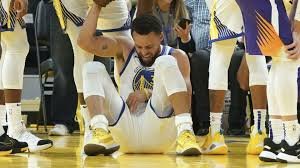
By the 2015-16 season, the Warriors were no longer a cute story; they were a superpower. Chasing the immortal 72-10 record set by the Michael Jordan-led Bulls, Curry was having a season for the ages, becoming the first unanimous MVP in league history. But even in the midst of historic success, the injury bug lurked in the shadows. When the playoffs began, the basketball world witnessed a “stephen curry injury” that would cast a long shadow over the entire postseason.
The First Round Fall
In Game 4 of the first round against the Houston Rockets, Curry slipped on a wet spot on the court. In an instant, he grabbed his knee, and the Chase Center (then Oracle Arena) went silent. He had suffered a sprained MCL in his right knee . The initial prognosis suggested he would miss about two weeks, but for a team with title aspirations, the uncertainty was agonizing. He missed the remainder of the series against the Rockets and the first three games of the next round against the Portland Trail Blazers.
When he returned in Game 4 against Portland, he did so in dramatic fashion, coming off the bench to score 40 points, including 17 in overtime . It was a heroic performance that seemed to alleviate fears. However, the residual effects of the injury lingered. While the stat lines were still impressive, the explosiveness that had defined his regular season seemed a half-step slower in the Finals against the Cleveland Cavaliers. The Warriors ultimately blew a 3-1 lead, and while no one used the knee as a direct excuse, the “what ifs” lingered. It was a stark reminder that even a seemingly minor knee injury to a player of his caliber can tilt the balance of a championship series.
The 2017-18 Setback
The knee issues didn’t disappear the following year. During the 2017-18 season, a “stephen curry injury” became a recurring theme. He missed a total of 31 games due to a combination of ankle sprains and a sprained MCL in his left knee . In fact, he missed 16 of the Warriors’ final 17 regular season games.
At the time, the team had enough star power—with Kevin Durant, Klay Thompson, and Draymond Green—to absorb the regular-season losses. But the concern was palpable. The Warriors played it safe, preserving their star for the playoffs, a strategy that paid off with another championship . However, it established a pattern: the regular season wear and tear was beginning to accumulate, and managing his minutes became a necessary evil for a team with eyes on the ultimate prize.
The Night Everything Broke: The 2019 Hand Injury
If the ankle issues were a slow burn of concern, the 2019 incident was a sudden explosion of bad luck. Just five games into the 2019-20 season, the Warriors were already reeling from the departure of Kevin Durant and Klay Thompson’s ACL recovery. Then, disaster struck. Against the Phoenix Suns, Curry drove to the basket, fell hard, and landed on his left hand. He had fractured his hand .
This was different from the soft tissue injuries of the past. It wasn’t a sprain; it was a break. The timeline for recovery was immediate and extensive: four months . For a player who relies so heavily on feel and shooting touch, a broken hand was a terrifying prospect. The season, already teetering on the edge of irrelevance, was effectively over. Without their leader, the Warriors stumbled to a 15-50 record, the worst in the league . It was a humbling fall from grace for a team that had just been to five straight Finals. This particular “stephen curry injury” didn’t just impact the standings; it forced the organization to press the reset button, leading to the draft lottery luck that would eventually bring in James Wiseman and set the stage for the next chapter. Curry played in just five games that entire season . The sabbatical, however grueling the rehab, may have been the rest his body needed for the resurgence that was to come.
The 2020s: Managing the Aging Star
As Curry entered his mid-30s, the nature of his injuries shifted. The major, season-threatening issues gave way to the nagging, persistent pains of an aging athlete. The focus turned from “if” he would get hurt to “how” the team would manage the inevitable wear and tear.
The 2022-23 Lower Leg Scare
Late in the 2022-23 season, just as the Warriors were gearing up for another playoff run, a new “stephen curry injury” appeared on the radar. He suffered partial tears to the superior tibiofibular ligaments and the interosseous membrane in his lower leg . It was a complex injury to a part of the body that doesn’t often make headlines, and it forced him to miss a month of action.
Initially, the Warriors stumbled without him, losing four of their first five games. However, unlike the struggling squads of the past, this version of the Warriors managed to rally. They won five straight games before his return, proving that the organization had finally developed some depth to survive without their talisman . Curry returned in time to lead the team to the second round of the playoffs. This timeline showed a maturation of the franchise; they had finally learned how to survive short-term absences without completely capsizing their season.
The 2025-26 Season: The Curse of “Runner’s Knee”
As the 2025-26 season unfolds, the conversation has shifted once again. Stephen Curry, now 37 years old and one of the oldest active players from the legendary 2009 draft class, finds himself sidelined with a condition that sounds almost too mundane for a player of his stature: “runner’s knee.” But there is nothing mundane about the impact this injury is having on the Golden State Warriors.
What is Patellofemoral Pain Syndrome?
The official diagnosis for Curry’s current ailment is patellofemoral pain syndrome, which manifests as pain around the kneecap .stephen curry injury In simple terms, it’s a condition where the cartilage under the kneecap becomes irritated, or the tracking of the kneecap is slightly off, causing discomfort during movement. While it’s common among runners (hence the nickname), for a basketball player who relies on explosive lateral movements and abrupt stops, it can be a frustrating and lingering issue.
Complicating matters further is the presence of bone bruising in the same knee . Curry initially injured the knee in a game against the Detroit Pistons on January 30, 2026, and what was initially hoped to be a short rest period has spiraled into a multi-month ordeal . The recovery timeline for runner’s knee with conservative treatment typically ranges from four to eight weeks, but the accompanying bone bruising has prolonged the process significantly . As of mid-March, Curry has already missed 15 consecutive games, with the team announcing he will be re-evaluated around March 21, meaning he will miss at least five more .
The Frustration Mounts in the Bay
The absence of the two-time MVP has been nothing short of devastating for the Warriors’ cohesion. When Curry is on the floor, the team boasts a respectable 23-16 record. Without him? They have cratered to a 9-17 record . This isn’t just about the points he scores; it’s about the gravity he creates. Defenses warp around him, leaving openings for role players who suddenly find themselves guarded by the opposition’s best defenders.
Head Coach Steve Kerr has been transparent about the emotional toll this is taking on his star. “He’s frustrated,” Kerr revealed to the media. “He wants to be out there for his guys. It’s an injury that’s lasted a lot longer than anyone thought it would” . For a competitor like Curry, watching his team struggle from the sidelines is a unique form of torture. He has returned to individual on-court work, but the team is being exceedingly cautious. Kerr emphasized that there have been no conversations about shutting Curry down for the remainder of the season, but the team is following the lead of trainer Rick Celebrini to avoid any setbacks . The “stephen curry injury” has become the central storyline of the Warriors’ season, a race against time to see if he can return to drag a faltering team into the playoffs.
| Season | Injury Type | Games Missed | Team Record Without Him |
|---|---|---|---|
| 2011-12 | Ankle/Foot | 56 | 10-30 |
| 2015-16 | MCL Sprain (Knee) | 6 | 4-2 |
| 2017-18 | Ankle/Knee | 16 | 6-10 |
| 2019-20 | Broken Hand | 58 | 13-45 |
| 2022-23 | Leg Ligament Tears | 10 | 6-4 |
| 2025-26 | Patellofemoral Pain Syndrome | 15+ (ongoing) | 5-10 (during absence) |
The Anatomy of Longevity: How Curry Defies Time
In a league that chews up and spits out players by the time they reach their mid-30s, Stephen Curry’s ability to remain an elite contributor is a testament to his meticulous lifestyle. When he isn’t lighting up the scoreboard, he is engaging in a battle of maintenance that would exhaust the average person. He has turned recovery into an art form, utilizing a combination of modern technology and old-fashioned discipline.stephen curry injury
His daily routine is a masterclass in preservation. Beyond the team-mandated practices, Curry incorporates cold tubs, saunas, and compression sleeves to ensure blood flow and reduce inflammation . He is a vocal proponent of the Normatec compression boots, often wearing them while watching film or reading with his wife, Ayesha . Even his sleep is regimented; he uses audio tracks designed to trigger specific brainwaves to enhance deep sleep . It’s this level of detail—the willingness to do the unglamorous work—that allows him to withstand the rigors of an 82-game season. He has admitted that if he skips even one of these recovery steps, he feels it immediately, a stark reality for an athlete in the twilight of his career .
The Mental Battle of Rehabilitation
Perhaps the most underrated aspect of any major “stephen curry injury” is the psychological warfare waged in the training room. The physical pain is one thing, but the isolation of being separated from teammates, the monotony of rehab drills, and the creeping doubt about whether the body will hold up can be crippling.
Curry has often spoken about finding “fun in the process” of recovery . He approaches his rehab with the same competitive fire he brings to a Game 7. Whether it’s a balance drill or a light shooting session, he finds ways to measure progress and declare small victories. This mindset is crucial. It’s the difference between a player who returns timid and hesitant and one who returns ready to drop 40 points in overtime. By reframing recovery as a challenge to be conquered rather than a punishment to be endured, Curry has managed to stave off the mental decay that often accompanies physical decline. His ability to stay engaged and positive, even while cheering from the bench in street clothes, provides a stabilizing force for a young Warriors team searching for direction.
Conclusion
The story of Stephen Curry’s career is a paradox. It is a tale of the most durable “fragile” player the league has ever seen. Year after year, the headlines warn of the latest “stephen curry injury,” and year after year, he fights his way back to the summit of the basketball world. From the dark days of multiple ankle surgeries that nearly cost him his career to the freak hand fracture that ended a season before it began, Curry has navigated a minefield of physical setbacks. Each scar on his medical chart tells a story of resilience, not just of the man, but of a franchise built in his image.
As we watch him work through the latest challenge—the nagging patellofemoral pain syndrome of the 2025-26 season—we are reminded that time remains undefeated. Yet, writing off Stephen Curry has always been a fool’s errand. His meticulous approach to recovery, his unwavering mental fortitude, and the sheer joy he derives from the game suggest that this chapter is far from over. Whether he returns in time to salvage a play-in berth or is held out to fight another day, his legacy is secure. He has transformed the way we think about injury management, proving that with enough dedication, a player can outrun the dark clouds of doubt for far longer than anyone thought possible. The body may ache, and the knees may creak, but the fire that drives him remains inextinguishable.
Frequently Asked Questions
What is Stephen Curry injury status in 2026?
As of March 2026, Stephen Curry is sidelined with patellofemoral pain syndrome, commonly known as “runner’s knee,” in his right knee, complicated by bone bruising . He has missed over 15 games and the team announced he will be re-evaluated around March 21, meaning he will miss at least five more games. He has resumed individual on-court work but has not yet participated in full team practices .stephen curry injury
How many games has Stephen Curry missed due to injury in his career?
Curry has missed significant time at various points. He missed 56 games in 2011-12 due to ankle issues and 58 games in 2019-20 due to a broken hand . He has also had seasons where he missed 31 games (2017-18) and 16 games due to various knee and ankle sprains. The current 2025-26 absence is adding to that total.
What was the most serious injury of Stephen Curry’s career?
Many would argue the most serious were the recurring ankle injuries early in his career, as they required two surgeries and threatened his long-term viability in the league . In terms of immediate games missed, the broken hand in 2019 was the most significant single-event absence, keeping him out for four months .
How does Stephen Curry prevent injuries?
Curry follows a rigorous recovery and training routine. This includes strength and agility exercises like kettlebell swings and balance drills, as well as recovery tools like cold tubs, saunas, compression boots, and structured sleep patterns using audio aids . He also maintains a disciplined diet, especially during the season, focusing on proper nutrition to fuel his body.
Have the Warriors ever considered shutting Stephen Curry down for a season?
Coach Steve Kerr addressed this directly in March 2026, stating that shutting Curry down for the remainder of the season “hasn’t been a conversation” . However, the team is taking a cautious approach to his recovery from knee pain to ensure there are no setbacks, prioritizing his long-term health over a rushed return.